
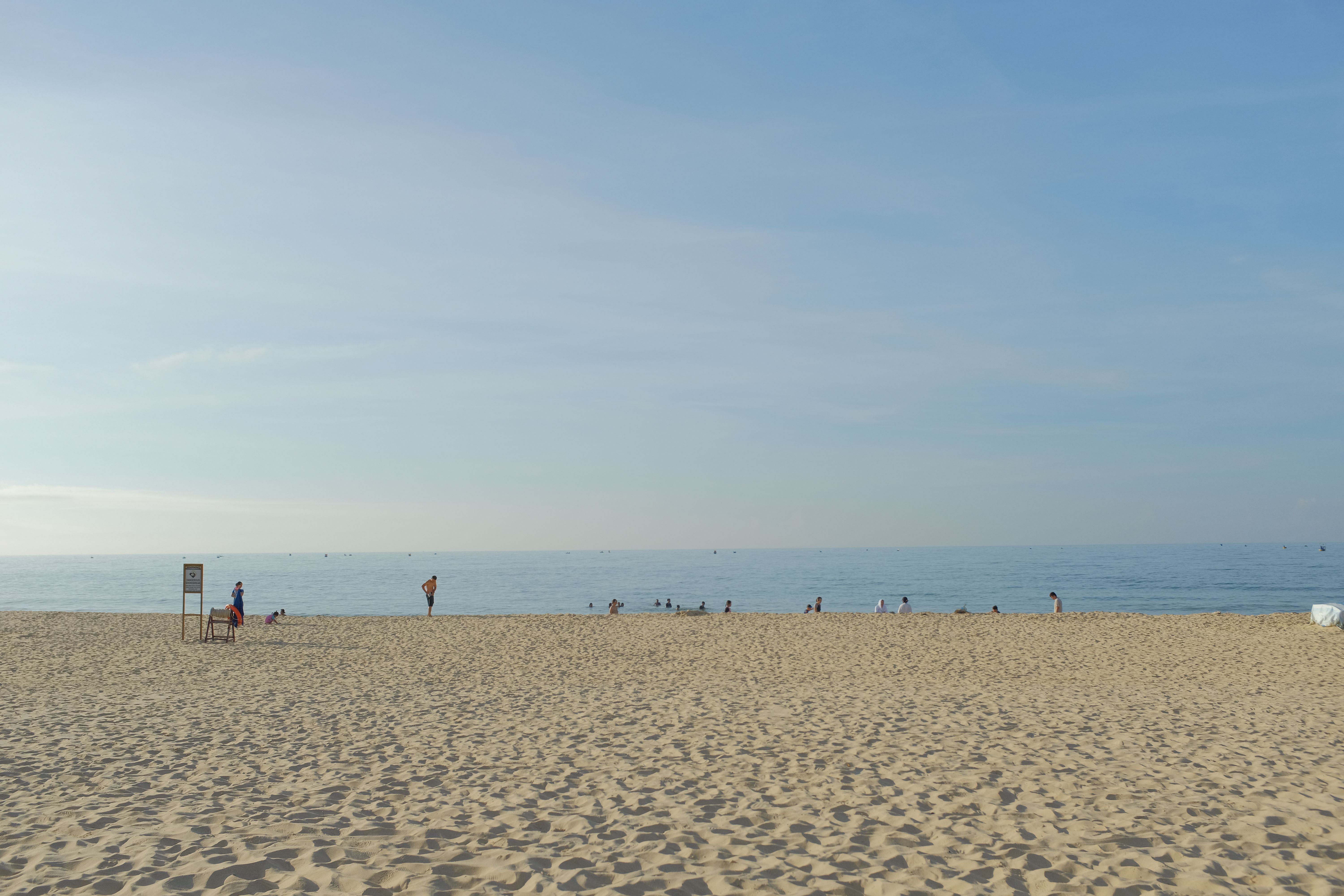
A beach that shrinks each year is not simply being washed away. Sand moves along a coast continuously, and erosion usually means the supply has been interrupted somewhere else.
Sand travels along the shore
Waves that arrive at an angle push sand up the beach diagonally and pull it back straight down, moving each grain slightly along the coast with every cycle.
Repeated over millions of waves, this produces a steady current of sediment running in one direction, often for tens of kilometres.
A beach is the visible balance of that flow, gaining sand from one direction and losing it to the other, and it is stable only while both continue.
Structures interrupt the flow
Harbour walls, jetties and groynes block the along-shore current, and sand accumulates on the upstream side while the downstream side is starved.
The pattern is distinctive and visible from the air, with a wide beach on one side of a structure and a scoured shoreline on the other.
Because the effect appears down-current rather than at the structure, the cause and the damage are often in different municipalities entirely.
Rivers and dams control the supply
Much of the sand on a coast originates inland and is carried to the sea by rivers, where the along-shore current then distributes it.
Dams and reservoirs trap that sediment behind them, and extraction of river sand for construction removes more before it reaches the coast.
Coasts fed by dammed rivers therefore lose beach even where no coastal structure exists, and the deficit accumulates slowly over decades.
Storms redistribute rather than destroy
A severe storm can strip a beach in hours, moving sand offshore into bars that break subsequent waves.
On a healthy coast, calmer conditions return much of that sand to the beach over following months, so the loss is seasonal rather than permanent.
Where the supply has already been cut, the recovery does not happen, and each storm leaves the beach narrower than the last.
Replenishment buys time rather than a solution
Beach nourishment, in which sand is dredged from offshore and placed on the beach, restores the beach quickly and visibly.
It does not address the interrupted supply, so the placed sand moves away on the same current and the work must be repeated on a cycle.
Resorts in eroding areas budget for this as a recurring cost, which is why the same stretch of coast can look different from one season to the next.